In this guide
- Why most mental health apps fail for ADHD
- What an ADHD brain actually needs from a wellness app
- How InnerPiece was built for the ADHD brain
- ADHD app comparison: what is out there vs what you need
- The emotional side of ADHD and wellness
- Why "built by someone who gets it" matters
- Frequently asked questions
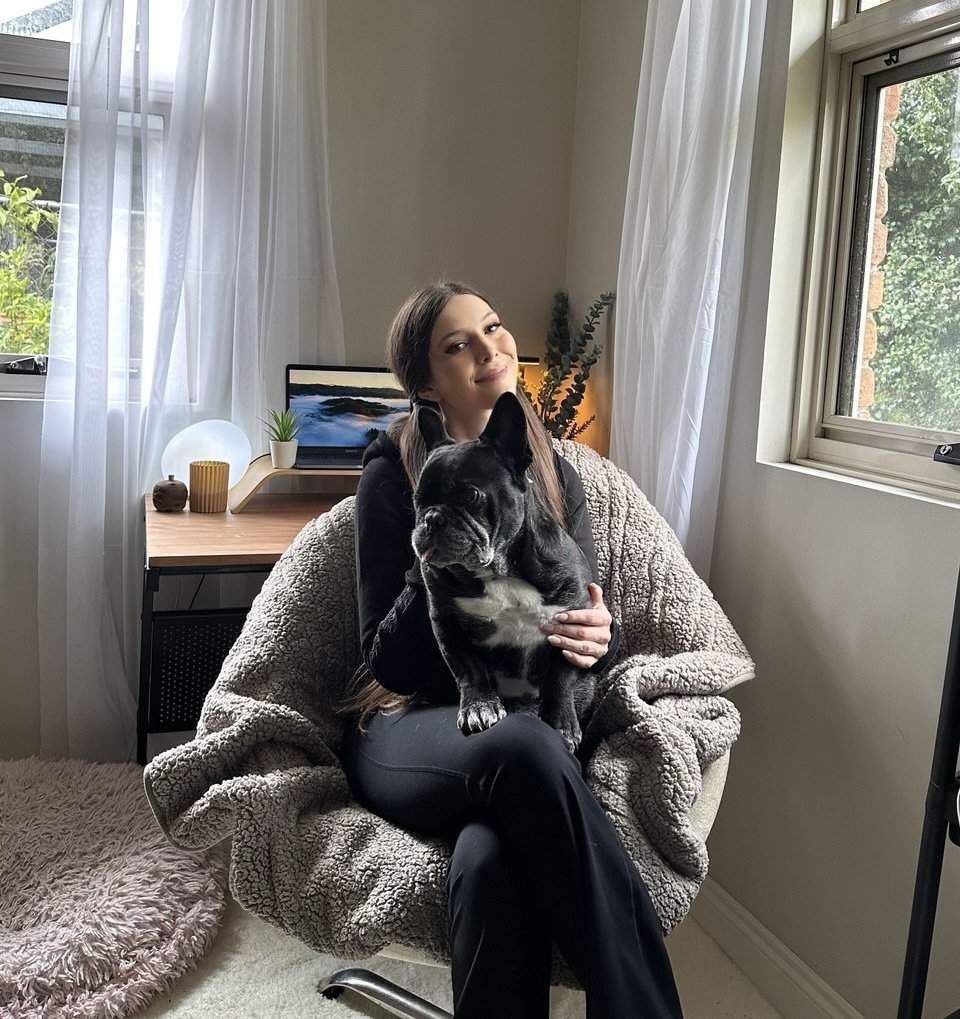
I have ADHD. I was diagnosed a few years ago, and suddenly a lifetime of unfinished journals, abandoned habit trackers, and half-used apps made a lot more sense. It was not a lack of motivation. It was my brain working differently, and every tool I tried was built for a brain that works in a straight line.
When I decided to build InnerPiece, I did not set out to build an "ADHD app." I set out to build the mental health app I actually needed. One that works with the way my brain operates, not against it. And it turns out, what works for ADHD brains tends to work better for everyone.
This article is personal. Because ADHD is personal.
Why most mental health apps fail for ADHD
If you have ADHD, you have probably downloaded dozens of wellness apps. Meditation apps, journaling apps, habit trackers, mood logs. And you have probably abandoned almost all of them within a week. That is not a character flaw. That is a design problem.
Here is what goes wrong with most apps when you have ADHD:
- Too many choices on the home screen. Your brain freezes. You close the app.
- No guidance on what to do. You open a blank journal page and your mind goes blank too.
- They rely on you to remember. If you had great memory and follow-through, you probably would not need the app.
- Complex setup processes. Customising categories, setting schedules, choosing themes. By the time you are done setting up, you have lost all motivation to actually use it.
- No immediate reward or feedback. ADHD brains need dopamine. If the app feels like homework, it is over.
- Everything is separate. One app for journaling, one for habits, one for moods. Switching between apps is the enemy of ADHD follow-through.

What's Draining Your Battery?
Find out if overstimulation, people-pleasing, perfectionism, or avoidance is your biggest energy drain. Free 2-minute quiz. Take the quiz →
I know this because I lived it. I tried Headspace. I tried Daylio. I tried Notion setups with 47 linked databases. And every single time, the same pattern: excitement on day one, guilt by day five, app deleted by day ten.
What an ADHD brain actually needs from a wellness app
When I studied psychology, I started understanding the science behind why these apps were failing me. ADHD is not just about attention. It is about executive function, working memory, emotional regulation, and dopamine. A mental health app for ADHD needs to account for all of that.
Here is what actually works:
- A companion that comes to you. Instead of relying on you to remember to open the app, something that checks in and asks how you are doing.
- Guided journaling with prompts. No blank pages. Just thoughtful questions that help you start writing without overthinking.
- Goals made for you. Based on what you have shared, the app suggests goals rather than making you create them from scratch.
- Habit tracking that is simple. Tap, done. No elaborate setup. No colour-coded systems that become a project in themselves.
- Everything in one place. Journaling, moods, habits, goals, toolbox, companion. One app. No switching.
- Gentle accountability. Not nagging push notifications. A companion that notices patterns and gently brings them up.
How InnerPiece was built for the ADHD brain
I did not add "ADHD features" to a normal app. I built InnerPiece from the ground up around how my brain works. Every design decision was filtered through a simple question: would I actually use this on a bad ADHD day?
If the answer was no, it did not make it into the app.
The companion checks in on you. You do not have to remember to open the app and start a conversation. Your companion reaches out. It asks how you are doing, references things you have shared before, and suggests what might help today. For ADHD brains, removing that first step of "deciding to do the thing" is everything.
Journaling is guided, not blank. When you open a journal entry, you are not staring at a cursor. You get prompts that are tailored to what is going on in your life. This is huge for ADHD. The hardest part of journaling is starting, and guided prompts eliminate that barrier entirely.
Goals are created for you. Based on your conversations, journal entries, and mood patterns, InnerPiece suggests goals. You do not have to sit down and plan out a self-improvement roadmap. That is executive function heavy work, and ADHD brains struggle with it. The app does it for you.
Habit tracking is dead simple. No elaborate setup. No 15-step onboarding. Simple habits, simple tracking, simple feedback. You tap it, you are done, and you feel good about it.
Everything lives in one place. This was non-negotiable for me. I cannot maintain five separate apps. InnerPiece puts your companion, journal, mood tracker, habits, goals, wellness toolbox, and personal analytics all in one app. One place to go. One thing to open.
ADHD app comparison: what is out there vs what you need
| Feature | Most Wellness Apps | InnerPiece |
|---|---|---|
| Proactive check-ins | ✗ You must initiate everything | ✓ Companion reaches out to you |
| Guided journaling | ✗ Blank page or generic prompts | ✓ Personalised, context-aware prompts |
| Goal creation | ✗ You build everything yourself | ✓ Goals suggested based on your journey |
| Simple habit tracking | ✗ Complex setup required | ✓ Minimal friction, tap and done |
| All-in-one design | ✗ Separate apps for each feature | ✓ Everything in a single app |
| Remembers your context | ✗ Starts fresh every time | ✓ Builds on your history |
| Built by someone with ADHD | ✗ Built by teams without lived experience | ✓ Designed around real ADHD needs |
The emotional side of ADHD and wellness
ADHD is not just about focus. It is deeply emotional. Rejection sensitivity, emotional flooding, the shame spiral of knowing what you "should" be doing and not being able to do it. These are real, everyday experiences for people with ADHD, and most wellness apps completely ignore them. If you want to understand what is draining your mental energy, try our free What's Draining Your Battery? quiz.
InnerPiece's companion is designed to meet you where you are. If you are having a rough day, it does not push you to be productive. It checks in, listens, and suggests something that actually fits your current state. Maybe that is a journal entry. Maybe that is just venting. Maybe that is a guided breathing exercise from the wellness toolbox.
The point is that it adapts to you. Not the other way around.
Important: InnerPiece is a daily wellness tool, not a substitute for professional ADHD treatment or mental health care. If you are struggling, please reach out to a professional. In Australia, call Lifeline on 13 11 14 or Beyond Blue on 1300 22 4636.
Why "built by someone who gets it" matters
There are a lot of apps built by people who read about ADHD in a textbook. That is fine. But there is a difference between understanding ADHD intellectually and knowing what it feels like to abandon your tenth journaling app because the blank page triggered a shame spiral.
I built InnerPiece because I needed it. I studied psychology because I wanted to understand brains like mine. And I designed every feature around the question that matters most: will someone with ADHD actually use this on the hard days?
That is what makes InnerPiece different. It is not an app with ADHD features bolted on. It is an app built by an ADHD brain, for ADHD brains, with psychology informing every decision.
InnerPiece is a complete wellness app built by a psychology graduate with ADHD. It combines a personal companion, guided journaling, habit tracking, goal setting, mood tracking, a wellness toolbox, and personal analytics, all in one place. No switching between apps. No complex setup. No blank pages. Just a system that actually works for your brain.
Frequently asked questions
Why do most mental health apps not work for ADHD?
Most apps rely on the user to remember to open them, navigate complex menus, and stay consistent on their own. ADHD brains struggle with all of these things. Without built-in guidance, reminders, and simplicity, people with ADHD tend to abandon apps within a few days. The best ADHD apps reduce friction and do the heavy lifting for you.
What features should a mental health app have for ADHD?
Look for a companion that checks in on you rather than waiting for you to remember, guided journaling with prompts so you do not stare at a blank page, automatic habit tracking that does not require complex setup, goals that are created for you based on your needs, and a simple interface that does not overwhelm you with options.
Is InnerPiece specifically designed for ADHD?
InnerPiece was built by someone with ADHD who experienced firsthand how most wellness apps fail neurodivergent users. While it is designed for everyone, its core features like proactive check-ins, guided journaling, goal creation, and a simple all-in-one interface are especially well suited for ADHD brains that need structure without complexity.
Can an app really help with ADHD mental health?
An app is not a replacement for professional support, but it can be a powerful daily tool. For people with ADHD, having a structured place to journal, track moods, build habits, and reflect can make a real difference. The key is that the app needs to work with your ADHD brain, not against it.
Is InnerPiece available on iPhone and Android?
InnerPiece is being built for both iOS and Android. Visit the main site to be among the first to know when it launches.


